

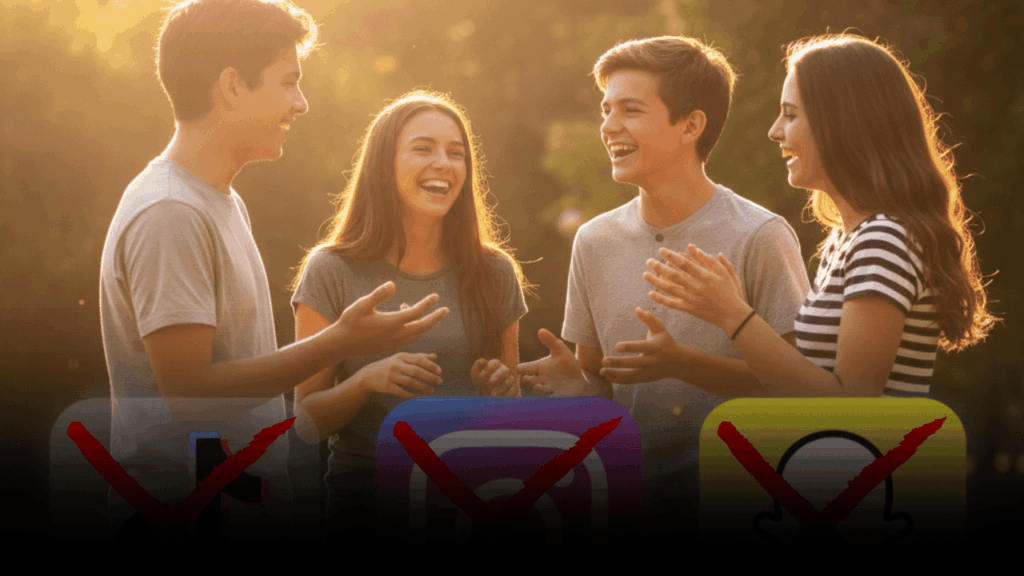
From December 10 2025, young Australians under 16 will be saying goodbye to TikTok, Instagram, Snapchat and other major social platforms. The social media ban has fuelled frustration, confusion and plenty of heated opinions. But beneath all the noise sits a simple and important truth. Online safety for children has never mattered more, and this moment gives us an opportunity to rethink how we support young people in the digital world.
While many kids feel angry or distressed, and many parents are unsure what to think, the intent of the reform is clear. It exists to protect children from preventable harm. That is something we should all take seriously.
At Safeguarding You, our commitment is unwavering. Child safety comes first in every environment where young people learn, play, connect and grow. That includes community sport, education, arts, recreation, disability services and increasingly, the online spaces where children spend so much of their time.
Across Australia, the Victorian Child Safe Standards, the Queensland Child Safe Standards and the National Principles for Child Safe Organisations all share the same message. Organisations must identify, assess and reduce risks to children. They must create environments where children feel safe, informed and supported. They must consider online environments in exactly the same way they consider physical ones. Social media is not an optional concern. It is a core part of child safety.
This reform is a response to a decade of increasing risks in digital spaces. Social media has given young people extraordinary access to creativity, learning and connection. It has also exposed them to bullying, grooming, body image pressure, sexual exploitation, violent content, misinformation and addictive algorithms designed to keep them scrolling long after it stops being healthy. These are not hypothetical dangers. They are real, persistent and growing.
Whether someone agrees or disagrees with the ban, the underlying purpose is the same. It aims to strengthen safety, reduce preventable harm and support healthier development during the years when children are most vulnerable.
We also need to acknowledge the emotional impact on young people. For many, social media is where friendships are built and identities are shaped. Losing that connection will feel like a shock. Some will feel sadness. Others will feel left out or anxious. Parents may feel guilty or uncertain about how to help. Clubs, schools and organisations will need to prepare for questions, frustrations and new expectations.
This is exactly why the conversation cannot simply be framed as something being taken away. It needs to be framed as a chance to create something better.
This moment gives children room to rediscover real world connection and build healthier habits. It gives families an opportunity to reset routines that may have unintentionally drifted into unhealthy patterns. It gives organisations the chance to lead with clarity and care, and to support families through change rather than leaving them to navigate it alone.
For young people who feel like they are losing something important, the message is simple. This is not the end of social connection. It is the start of a different kind.
There are many safe and engaging alternatives. Messaging apps that remain appropriate for under 16s. School based communication platforms. Creative digital tools that encourage art, music and design. Offline passions like sport, gaming, performing arts, volunteering, STEM clubs and weekend meetups. These are places where identity can grow without the constant pressure of comparison or performance.
Parents can support the transition by opening real conversations, not just applying a rule. Explain the why. Acknowledge the frustration. Co design new routines together. Encourage real world friendships. Celebrate the strengths a child shows through the change. Young people adapt best when they feel heard, respected and supported.
For clubs, schools, community organisations and youth services, this is a pivotal moment. Online safety policies may need updating. Communication channels may need reviewing. Staff and volunteers will need guidance on how to engage with families and young people as the change approaches. Safeguarding You supports organisations across Australia to assess and improve online safety practices, align with Child Safe Standards and build environments that keep young people safe and supported.
This is more than a social media ban. It is a national conversation about what we want childhood to look like in a digital age. It is an opportunity to rebuild trust, strengthen relationships and focus on the environments that truly help young people thrive.
Young people are not losing their ability to connect. They are gaining space to develop healthier, safer and more meaningful connections. When we approach this moment with clarity, empathy and leadership, we give them something far greater than a feed. We give them the foundation for real conversations, real friendships and real growth.