
An inspector walks into your office.
No warning. No prep time. Just a badge, a tablet, a quick peek around and lots of questions.
Your team freezes. Your documentation isn’t where it should be. Your sleep that night? Gone.
This is what’s coming across Australia and aggressively in certain states.
With unannounced audits on the rise, many operators are left scrambling. What was once “good enough” is now a red flag. The result? Sanctions. Reputation damage. Families losing trust.
Here’s the reality:
You won’t get a heads-up. But you can be ready.
Safeguarding You is built for operators like you who care about doing the right thing – and proving it, fast. We help you assess, report, improve, and certify – so you’re not caught off guard when that audit drops. Instead, you lead with confidence.
Operators who prepare now… pass tomorrow.

The Rapid Child Safety Review (the Review) was announced following allegations of sexual assault against children in long day care services in Melbourne. The Review was asked to look at immediate steps the Victorian Government could take itself, and advocate for nationally, to improve child safety in ECEC in Victoria. On the 15th August 2025 the Rapid Review was released. It found:

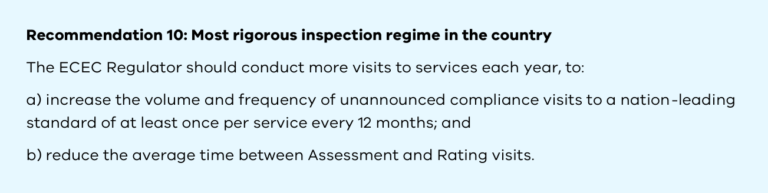
Of the 22 Recommendations contained within the Rapid Review, all of which have been accepted and will be introduced by the Victorian Government, one stands out to providers:
A single platform that makes your safeguarding and quality practices visible, trackable, and easy to evidence for regulators, staff and families.
A structured system to capture, manage and resolve issues quickly - reducing risk while demonstrating accountability.
Tools, insights and resources to help you measure progress, close gaps and consistently raise your provider standards over time.
Protecting Your Most Vulnerable.
Child safety failures in early learning services are under the spotlight, with regulators, parents, and the media demanding stronger safeguards. Even with policies in place, providers struggle to demonstrate and track compliance across their teams.
Without a clear, centralised system, gaps remain hidden until it’s too late – risking children’s wellbeing, damaging reputations, and exposing providers to serious regulatory and legal consequences.
Safeguarding You’s Child Safe Implementation Program gives ECEC providers a dedicated platform to meet and exceed the Victorian Child Safe Standards. From smart self-assessment to incident management and transparent reporting, you’ll have the confidence, evidence, and culture of safety needed to protect children and strengthen trust with families.
Thrive With Best Practice Quality Standards
The National Quality Standards set the benchmark for quality in early childhood education, but compliance can feel overwhelming and fragmented. Many centres waste hours piecing together evidence, audits and action plans.
Falling short on NQS isn’t just a compliance issue – it impacts ratings, funding, enrolments and parent confidence. In a competitive sector, being “good enough” is no longer good enough.
Safeguarding You’s NQS Implementation Program simplifies compliance and drives improvement. Our platform centralises your policies, assessments, evidence and action plans into one streamlined system – so you can focus on delivering excellence in learning, care and outcomes for children, while confidently proving your quality to regulators and parents.


Creating an environment where children of all backgrounds, especially Aboriginal children, feel safe, respected, and valued. It’s about being aware of and responsive to the diverse cultural needs and backgrounds of children to ensure they are not discriminated against or disadvantaged. Implement practices and policies that promote understanding and respect for different cultures, and ensure staff are trained to be culturally sensitive.
Ensuring the environments where children are present are secure, supportive, and nurturing. This involves putting in place policies and procedures to protect children from harm, abuse, and neglect. It also includes training staff to recognise and respond to child safety concerns and creating a culture where children’s safety is a top priority. The goal is to provide a setting where children are not only safe from physical and emotional harm but also encouraged to thrive and develop positively.
Giving children and teenagers a voice and involving them in decisions that affect them. This includes listening to their ideas and opinions, respecting their views, and encouraging them to speak up about their needs and concerns. It’s about creating an environment where young people feel valued, heard, and able to contribute. This approach helps build their confidence and self-esteem, and ensures that the services or activities provided are more effectively tailored to their needs.
Staying up-to-date with the latest information, laws, and practices about child safety and wellbeing. This involves regularly training staff on child safety issues, understanding changes in legislation, and being aware of the best ways to protect and support children in their care. It’s about ensuring that the business or organisation continuously improves its approach to child safety by learning from new research, community feedback, and expert advice.
Creating an environment where all children, regardless of their background, are welcomed, respected, and valued. This involves understanding and embracing differences in culture, ethnicity, religion, disability, gender identity, and family background. It’s about making sure that every child feels included and supported, with equal access to opportunities and participation.
Ensuring staff and volunteers who interact with children are properly checked and trained to provide a safe and supportive environment. This includes conducting background checks, such as Working with Children Checks, to ensure they are suitable to work with children. It also involves providing regular training on child safety and wellbeing, understanding how to identify and respond to potential risks, and creating a culture where children’s safety is the top priority.
Having clear, accessible ways for children, staff, parents, and others to report any worries or complaints about child safety. This includes making sure everyone knows how and where to raise concerns, and ensuring these are taken seriously and responded to promptly and appropriately. It’s about creating an environment where people feel safe and supported to speak up if they think a child’s safety might be at risk.
Providing regular and comprehensive training to staff and volunteers on how to ensure child safety and wellbeing. This training covers understanding child abuse risks, recognising signs of harm, and knowing how to respond and report concerns appropriately. It’s about equipping everyone in the organisation with the knowledge and skills they need to create a safe and supportive environment for children.
Ensuring both the physical spaces and the digital platforms used are safe and appropriate for children. This involves creating secure, welcoming, and age-appropriate environments where children can learn, play, and interact without exposure to harm or abuse. In physical spaces, it includes measures like secure premises and safe equipment. Online, it means protecting children from cyberbullying, inappropriate content, and online predators.
Putting into action the policies and procedures you have developed to protect children. This involves not just having rules on paper but actively applying them in day-to-day operations. It includes training staff, monitoring activities, and regularly reviewing how well the child safety measures are working. Implementation is about making child safety a practical and integral part of the business, ensuring that every aspect of interaction with children is guided by these standards.
Having a set of clear guidelines and methods to ensure the safety and wellbeing of children. These policies and procedures outline how to prevent and respond to potential harm or abuse of children. They include guidelines on how to conduct background checks, manage staff training, report incidents, and ensure a child-friendly environment. The aim is to have a structured approach that everyone in the organisation understands and follows, ensuring consistent and effective protection for children in their care.
The Act defines employment as work performed by a child under the age of 15: under a contract of service or services; or in a business, trade, or occupation for the benefit of the business or person involved in the business, trade or occupation, or in a non-for-profit organisation, for the benefit of the organisation, or a person involved in the not-for-profit organisation and is under direction about how the work is to be performed. This is for work that is both paid and unpaid.
This area focuses on ensuring that every child’s learning and development is guided by a thoughtful, well-planned program. It emphasises play-based learning, intentional teaching and ongoing assessment so that children are supported to grow, achieve and thrive. Services are expected to embed approved learning frameworks into everyday practice, while tailoring experiences to the needs, strengths and interests of each child.
Children’s safety, health and wellbeing are at the heart of this area. It covers the policies and procedures needed to manage illness, injury, hygiene, nutrition and supervision, as well as recognising and responding to emergencies. The goal is to create environments and practices that actively reduce risks while promoting safe and healthy habits.
This area ensures that the learning and play spaces – both indoors and outdoors – are safe, clean and designed to support children’s development. It includes adequate facilities, equipment and resources that encourage exploration, creativity and active play. The physical environment should not only protect children from harm but also inspire them to engage, experiment and learn.
The focus here is on building strong, reliable staffing structures that uphold children’s safety, security and learning. It ensures that educator-to-child ratios are maintained, staff qualifications are appropriate and continuity of educators is prioritised. Effective staffing creates stability for children and supports high-quality educational and care outcomes.
This area highlights the importance of respectful, supportive and responsive interactions between educators and children. Strong relationships foster a sense of belonging, security and trust, which are essential for learning and wellbeing. It also addresses the need to uphold children’s dignity, respect their voices and create inclusive and nurturing environments.
Partnerships with families and communities are central to supporting each child’s development. This area encourages services to build respectful, two-way communication with families, value their input and connect with community resources. By working together, services can provide richer experiences and better outcomes for children.
This area is about effective governance and continuous improvement. Strong leadership sets the tone for quality by embedding clear policies, procedures and ethical practices. It ensures that services are well-managed, compliant with regulations and focused on building a culture of reflection, accountability and ongoing professional learning.
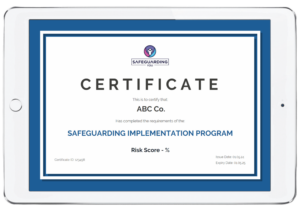
This Means: Order a Program Review & Receive a Certificate of Assessment